
Boosters that work — because we check first.
A signal booster is the right fix for exactly one situation: usable signal outside, dead signal inside. We verify that's your situation before we install anything — starting with the $89 survey.
A booster cannot create signal where none exists.
— the one sentence that mattersThe one sentence that matters
A booster amplifies what's there. If your outdoor signal is -100 dBm, a booster turns that into usable indoor coverage. If your outdoor signal is -115 dBm — nothing — a booster amplifies nothing, and anyone who sells you one anyway is selling you a placebo with a power cord.
That's why every booster job starts with measurement. The $89 signal survey tells us your real outdoor numbers, and if they're not booster-viable, we tell you to spend the money on Starlink instead — or on nothing at all. We'd rather lose the install than install a disappointment.
ISED-certified, RSS-131 compliant — always
In Canada, signal boosters must be certified under ISED's RSS-131 standard. Uncertified boosters — the cheap grey-market units all over online marketplaces — are illegal to operate and can interfere with carrier networks, which gets them shut down and can draw fines. We install certified equipment only, registered and configured to stay within legal gain limits.
This isn't a corner we cut to save you money, because it wouldn't save you money — it would cost you the install when the unit gets flagged. Certified gear, installed right, works for years. Grey-market gear works until it doesn't.
The metal-roof problem (the Faraday cage)
The most common booster case on the Island: great signal in the yard, one bar in the living room. Metal roofs, foil-backed insulation, concrete walls and Low-E glass all block RF — your house is a partial Faraday cage. This is actually the ideal booster scenario: strong outdoor signal to capture, a building that needs help distributing it indoors.
The fix is a proper donor antenna outside (aimed at the real tower, not "pointed roughly that way"), quality low-loss cable — not the thin stuff that eats half your gain before it reaches the amplifier — and indoor antennas placed where you actually live, not where the cable was easiest to run. Every one of those details matters; most DIY installs get at least two of them wrong.
Field note
The call I get most: "great signal in the yard, one bar in the kitchen." Nine times out of ten, it's the metal roof. The house is doing its job keeping the weather out — it's just keeping the signal out too.
What's in an install
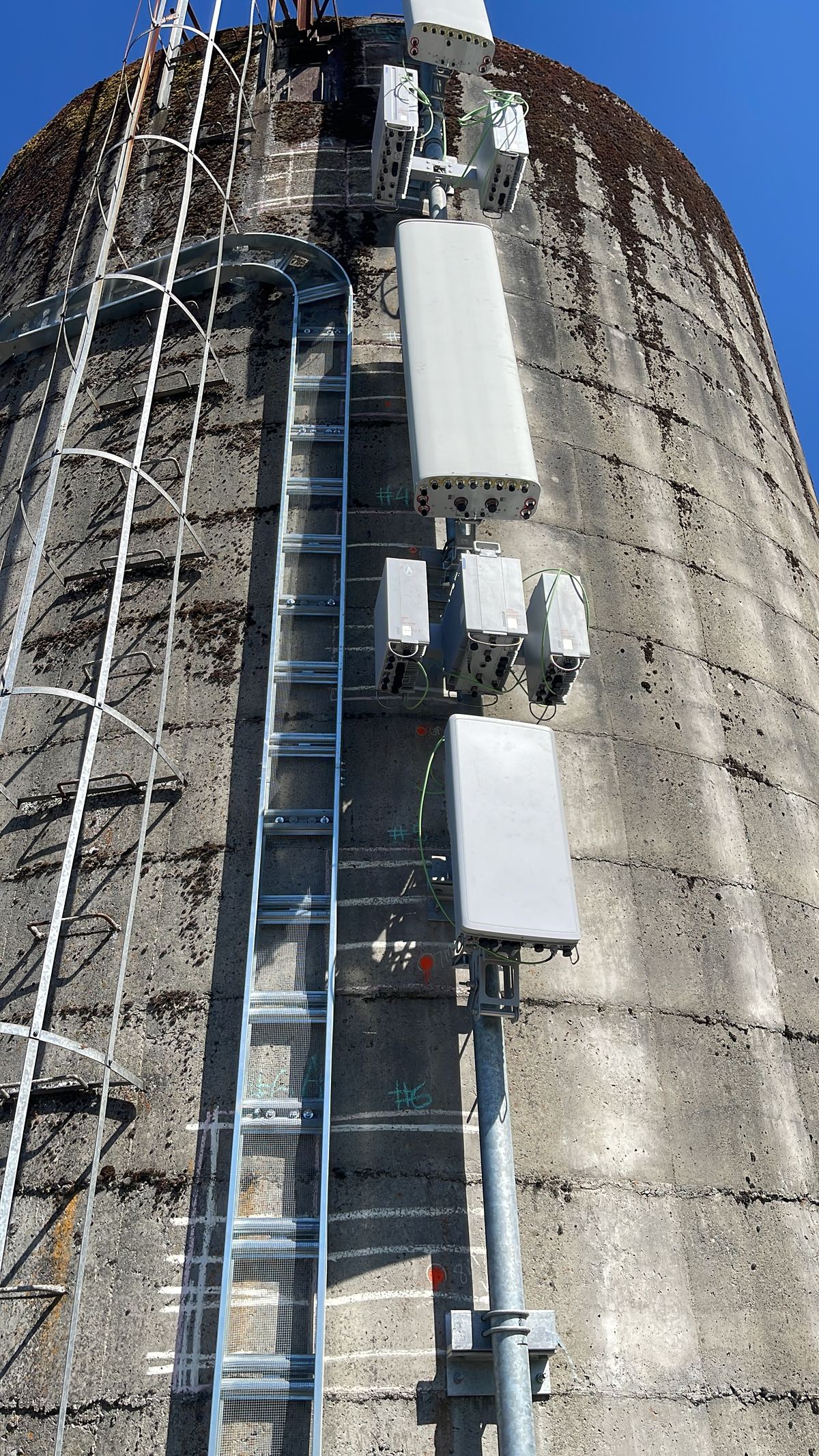
- Donor antenna — directional (yagi or panel), aimed at your best serving site after measurement, mounted for coastal weather.
- Amplifier — ISED-certified, sized to your building and signal levels, with proper gain settings (not just "turned all the way up").
- Distribution — indoor panel or dome antennas placed for real coverage, quality cable throughout, clean routing.
- Verification — before-and-after readings so you can see the improvement in numbers, not just bars.
Hardware is quoted separately from the install — we never imply the equipment is included in a service price. You know exactly what the gear costs and exactly what the labour costs.
When a booster is the wrong answer
No usable outdoor signal — get Starlink or accept it. Building too large for one amplifier without a designed multi-amplifier system (we do those, but they're a different quote). And renters: a booster needs a donor antenna mounted outside, which needs the landlord's okay. We check all of this at the survey stage.
Coverage
Residential booster installs run in our day-trip radius from the Parksville/Qualicum base: the mid-Island core, Nanaimo, Port Alberni and the Comox Valley, plus ferry day-trips to the Sunshine Coast and Gulf Islands. See the local pages: booster installation in Campbell River, Courtenay, Nanaimo, Parksville, Port Alberni and Qualicum Beach.
How do you pick which tower the donor antenna aims at?
The survey measures your actual outdoor signal and identifies the best serving site — then the donor antenna (yagi or panel) is aimed at that site and mounted for coastal weather. Not “pointed roughly that way”: donor placement is what separates a working booster from an expensive paperweight.
Common questions
Will a booster give me more bars?
It'll give you more signal — which is what bars try to show. We verify with before-and-after dBm readings, the real numbers. We don't guarantee bars or speeds, because those depend on the carrier's network too. What we guarantee: the system is designed, certified and installed correctly, and the improvement is measured, not promised.
Can I just buy a booster online and install it myself?
You can, and many people do — then call us when it doesn't work. The common DIY failures: uncertified grey-market units, donor antenna aimed wrong (or an omni where a directional was needed), cheap cable losing half the gain, and gain set wrong causing oscillation that shuts the amplifier down. A pro install costs more than a box; a box that doesn't work costs more than a pro install.
Does one booster cover a whole house?
A typical single-amplifier system covers a standard home well. Large homes, outbuildings, or buildings with heavy RF-blocking construction may need additional indoor antennas or a multi-amplifier design. The survey maps your building; the quote matches it.
Will it work for all carriers?
Certified wideband boosters amplify all Canadian carrier bands they cover — your Rogers phone and your guest's Bell phone both benefit. We confirm which bands serve your area during the survey so the equipment matches reality.
Is it legal? Do I need to register it?
ISED-certified boosters operated within their certified parameters are legal in Canada. Grey-market uncertified units are not. We install certified equipment only and handle the configuration; we'll tell you exactly what compliance looks like for your unit.
What if the survey says a booster won't work?
Then we don't sell you one. The survey report will say why — no signal to amplify, usually — and recommend the honest alternative, typically Starlink if your sky view allows. The $89 still bought you the truth, which is cheaper than a useless install.
Good signal outside, dead inside? That's fixable.
Start with the $89 survey — real outdoor readings, a written report, and a booster quote only if the numbers say it'll work. Credited toward the install within 30 days.