
Starlink, installed like it matters.
Starlink is the best answer for a lot of coastal properties — and a waste of money for some of them. The difference is the sky view. We assess honestly, mount properly, and route cables like someone who climbs towers for a living.
We'd rather lose the install job than install a disappointment.
The #1 issue: trees
Starlink needs a clear view of the sky. Not "mostly clear" — clear. On the BC coast, where properties sit under 30-metre firs and cedars, obstruction is the single biggest reason Starlink underperforms. A dish tucked under the canopy will connect, drop, reconnect and drop again, and you'll blame the satellite when the problem is the trees.
This is why the install starts with an obstruction assessment, not a ladder. We check the actual sky view from candidate mount points — roof peak, gable end, a pole mount in a clearing — and tell you straight whether Starlink will work well at your property, work with compromises, or fight the forest and lose. If the answer is bad, we'd rather lose the install job than install a disappointment. The $89 signal survey covers this assessment for properties weighing their options.
Field note
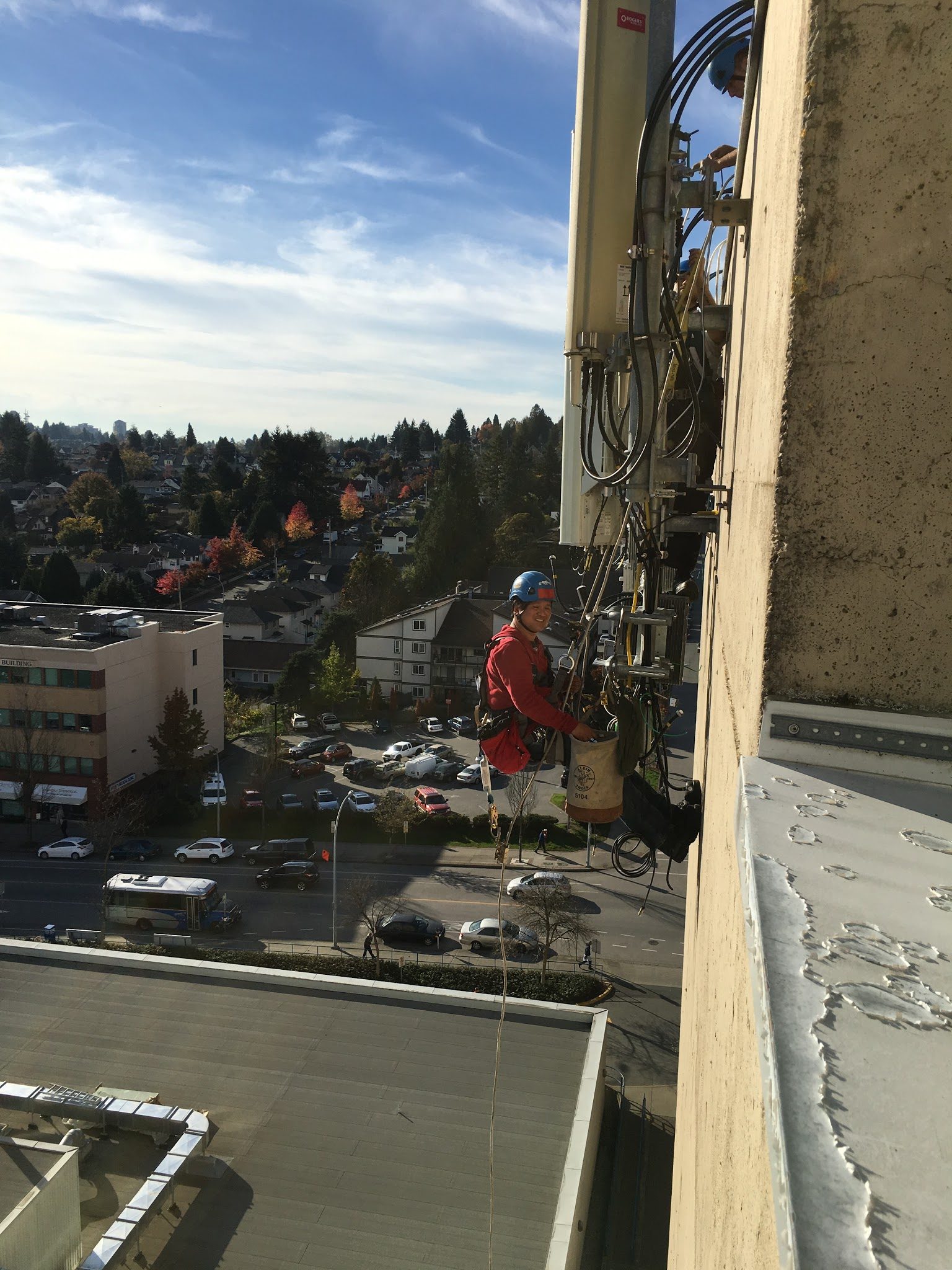
The Starlink app's obstruction scan is optimistic. I've stood on roofs where it said "great" and the dish still dropped every time a cedar swayed in the wind. I trust the scan — then I verify it with my own eyes, because "the app said fine" isn't a warranty.
What's in a proper install
Mounting. Roof mounts sealed against coastal rain, gable and fascia mounts where the roof line works better, or a dedicated pole mount set in a clearing when the building is tree-locked. The dish goes where the sky is, not where it's convenient to reach.
Alignment and aiming. Starlink self-aligns, but placement and initial positioning determine how much of the sky it actually uses. We verify the obstruction picture after placement — the app's own scan, confirmed by a human who knows what "good enough" looks like.
Cable routing. Clean, weatherproofed entry into the building. Drip loops, UV-rated cable where exposed, sealed penetrations — the details that separate a five-year install from a two-year one on the coast.
Network setup. Router placement for actual coverage in your home (not just "near the dish"), mesh nodes where the floor plan needs them, and basic segmentation if you're running business gear alongside personal devices.
Residential and commercial
Homes, cabins and acreages are the bread and butter — but we also install Starlink as backhaul for commercial connectivity builds: lodges, marinas, campgrounds and remote operations where Starlink (or bonded multiple units) is the honest answer for the pipe to the world.
No speed guarantees — here's why
Starlink performance varies with satellite load, weather, obstructions and your plan. Anyone who guarantees you a speed number is selling something. What we guarantee: the install is done right, the obstruction picture is documented and honest, and the network inside your building isn't the bottleneck. The satellite side is Starlink's department.
When Starlink isn't the answer
If you have usable cellular signal, a properly installed signal booster is often cheaper and lower-latency than Starlink. If you have neither signal nor sky, we say so — "nothing will fix this" is a real survey outcome, and it's better than a dish pointed at trees. Start with the survey; end with the right answer.
Coverage
Residential installs run in our day-trip radius from the Parksville/Qualicum base: the mid-Island core — see the local pages for Parksville and Nanaimo — plus Port Alberni and the Comox Valley, and ferry day-trips to the Sunshine Coast BC (Gibsons, Sechelt, Powell River, overview) and the Gulf Islands (Salt Spring Island, Pender Islands, Gabriola Island), plus the Discovery Islands (Discovery Islands — yachts, lodges, and boat-access properties).
Will my dish survive a January storm?
The mount will not move in the wind — that’s the part we control. We spec mounts for coastal wind loading and set them properly, because heavy rain may degrade the signal temporarily but the hardware must never move.
Common questions
Do I buy the Starlink kit myself?
Yes — you order the hardware directly from Starlink (that keeps the warranty clean and the account in your name). We handle everything from the mount up: assessment, mounting, routing, and network setup. Hardware is never bundled into our service pricing.
How do I know if my trees will be a problem?
The Starlink app has an obstruction scanner — run it from where you'd put the dish. But the app is optimistic. Our assessment confirms it with a professional eye, because "the app said fine" and "it works in a storm" are different things. If you're unsure, the $89 survey settles it.
Can the dish go on a pole away from the house?
Often the best option on treed lots. A pole mount in a clearing — properly set, grounded and cabled back to the building — gets the sky view the roof can't. We trench or run the cable overhead depending on the site.
Will it work in heavy rain and wind?
Heavy rain attenuates the signal — that's physics, not a defect. A properly mounted dish with clear sky rides out normal coastal weather; extreme downpours will degrade any satellite link temporarily. The mount, however, will not move in the wind. That's the part we control.
Can you set up WiFi coverage across a large property?
Yes — mesh nodes, outdoor access points for yards and outbuildings, and wired backhaul where it counts. Tell us the property layout and what needs coverage; we design it like the commercial networks we build, scaled to a home.
Is Starlink better than a booster for my place?
Depends on your signal. Usable outdoor cell signal → a booster is usually cheaper with lower latency. No signal but clear sky → Starlink. Neither → we'll tell you. This is exactly what the survey is for.
Trees between you and the sky?
On a boat instead? Yacht and marine Starlink installs are a separate service — mounts that survive Johnstone Strait.
Get the obstruction assessment before you buy the kit. $89, credited toward the install if you book within 30 days — and an honest "don't buy it" if the forest wins.